
Blogs
Filter by category:
All

AI Features in Real Products: 9 Use Cases That Actually Pay Off
AI is everywhere in the modern business world. What used to sound like science fiction is now reality in many products and services. In fact, by 2025 about 78% of enterprises worldwide are using AI in at least one business function and are seeing about $3.70 in value for every $1 spent on AI. Companies are leveraging AI to increase revenue and reduce costs. Below, we explore 9 real-world AI use cases (for both consumer and business scenarios) where artificial intelligence features are actually paying off. These examples - from personalized recommendations to fraud detection - show concrete benefits and the business ROI of AI in action. Each use case summarizes how famous companies are using AI in their products and the results they get from using it.

Scaling Your SaaS or Platform Faster: How Augmented Teams Accelerate Product Roadmaps
Imagine having a small team that is trying to build a big software product. You have lots of features to add, but few hands to get it done fast. This is a common problem among SaaS startup founders and CTOs. The good news is, there is a way to solve it. It is called a SaaS staff augmentation strategy. That is a fancy term for bringing in extra expert developers to help your team. In simple words, you get outside talent to join your project so you can move faster. This strategy (also known as technical team augmentation) lets you add people when you need them, then finish the work without having to hire full-time staff. We will explain how this works and how it can help you speed up your product roadmap.
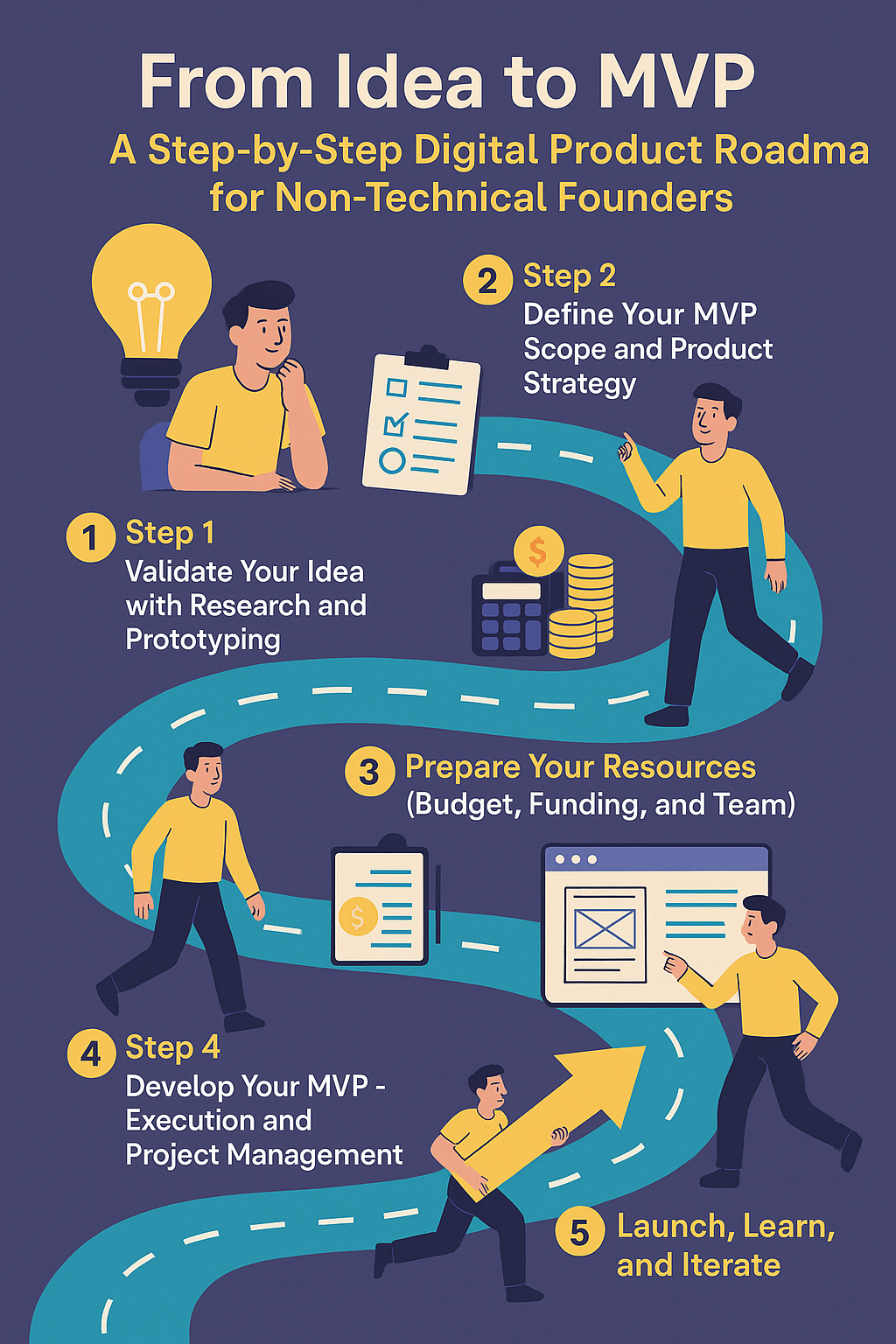
From Idea to MVP: A Step-by-Step Digital Product Roadmap for Non-Technical Founders
It's intimidating to build a tech startup when you can't code. You probably are one of those non-technical founders who do not know where to start. Well, the good news is that everything from this simple idea inside your head to a working MVP in users' hands is covered by this digital product roadmap for non-technical founders. We’ll walk through each step in plain language, so it's easy to follow; almost like a friendly Non-Technical Founder MVP Guide.

How to Choose a Digital Product Development Partner (Without Slowing Down Your Team)
The choice of a partner in the development of your digital product is among the most critical decisions that you'll ever make regarding your product. It will either make or break your project's success. A good partner does not feel like an outsider but works as an extension of your team and helps to move your product faster with fewer mistakes. On the other hand, the wrong partner may weigh your team down and push your timelines back, which in turn causes frustration and delay. And of course, a real partner-not just some other vendor-is on the same team as you, keeping your project at full speed rather than holding it back. For instance, a digital product development partner will work closely with you, act as part of your own in-house team, instead of being an obstacle.

7 Signs You Should Use a Dedicated Development Team Instead of Hiring In-House
We will talk about why and when to hire a dedicated development team instead of hiring in-house.
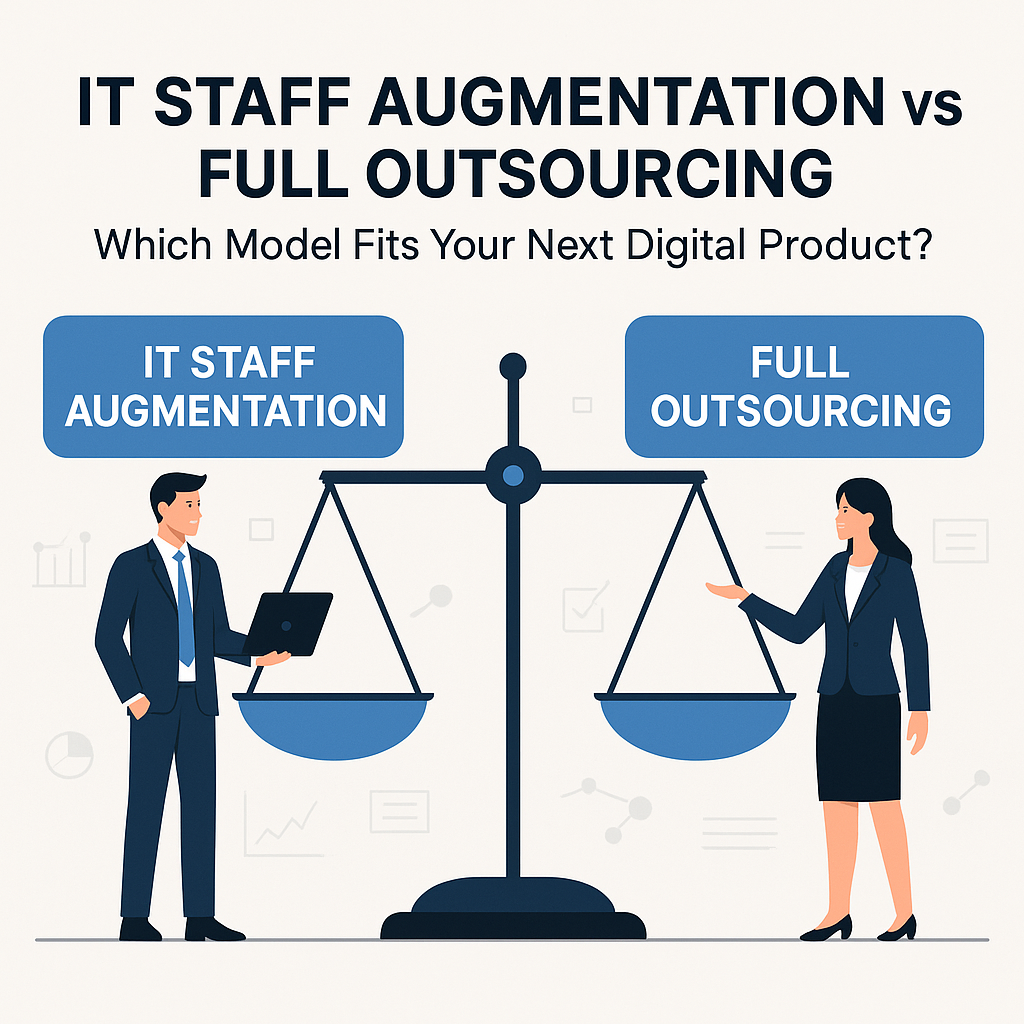
IT Staff Augmentation vs Full Outsourcing: Which Model Fits Your Next Digital Product?
The IT world is big and growing fast. By 2025, the global IT outsourcing market will hit nearly $591 billion. Spending on hiring extra tech staff (called “staff augmentation”) is around $81.87 billion. In fact, about 78% of companies now use flexible staffing models like staff augmentation. Why? There is a big IT talent shortage. Many firms say there are far more tech jobs than skilled people. This gap forces companies to seek talent in different ways - either by bringing people into their team or by having outside teams do the work. Both models offer a talent gap solution for a flexible IT workforce. We will explain what each model is, how they differ, and when to use each. We’ll also look at benefits and risks, share industry examples, and show how to measure return on investment.

Nearshore vs. Offshore Software Development: A Practical Guide for European & US Tech Leaders
Today's businesses need tech talent. Outsourcing not only spurs innovation but also reduces costs. The IT outsourcing market is expected to reach over $1T by 2030. Below, we explain what nearshore and offshore software development are and how they differ for US and European teams.

Bridging the Gap in Tech Talent: How IT Staff Augmentation Accelerates Software Projects Across the US & Europe
Many companies in Europe and the United States face the problem of needing more technology workers than they are able to find. This shortage of skilled software developers and IT is sometimes referred to as the "tech talent gap." In other words, there are more technology jobs available than people to fill them, which may decelerate important projects of software. It simply denotes that there is a gap between demand-the requirement for tech talent-and supply-people available with appropriate skills. Closing this gap is paramount to ensuring businesses can execute projects on schedule as well as further innovation. One very effective solution that businesses are implementing includes IT staff augmentation. This is how it works: IT staff augmentation will help companies fill talent gaps fast by adding more skilled people to their teams on a temporary basis so projects can keep moving full speed ahead.